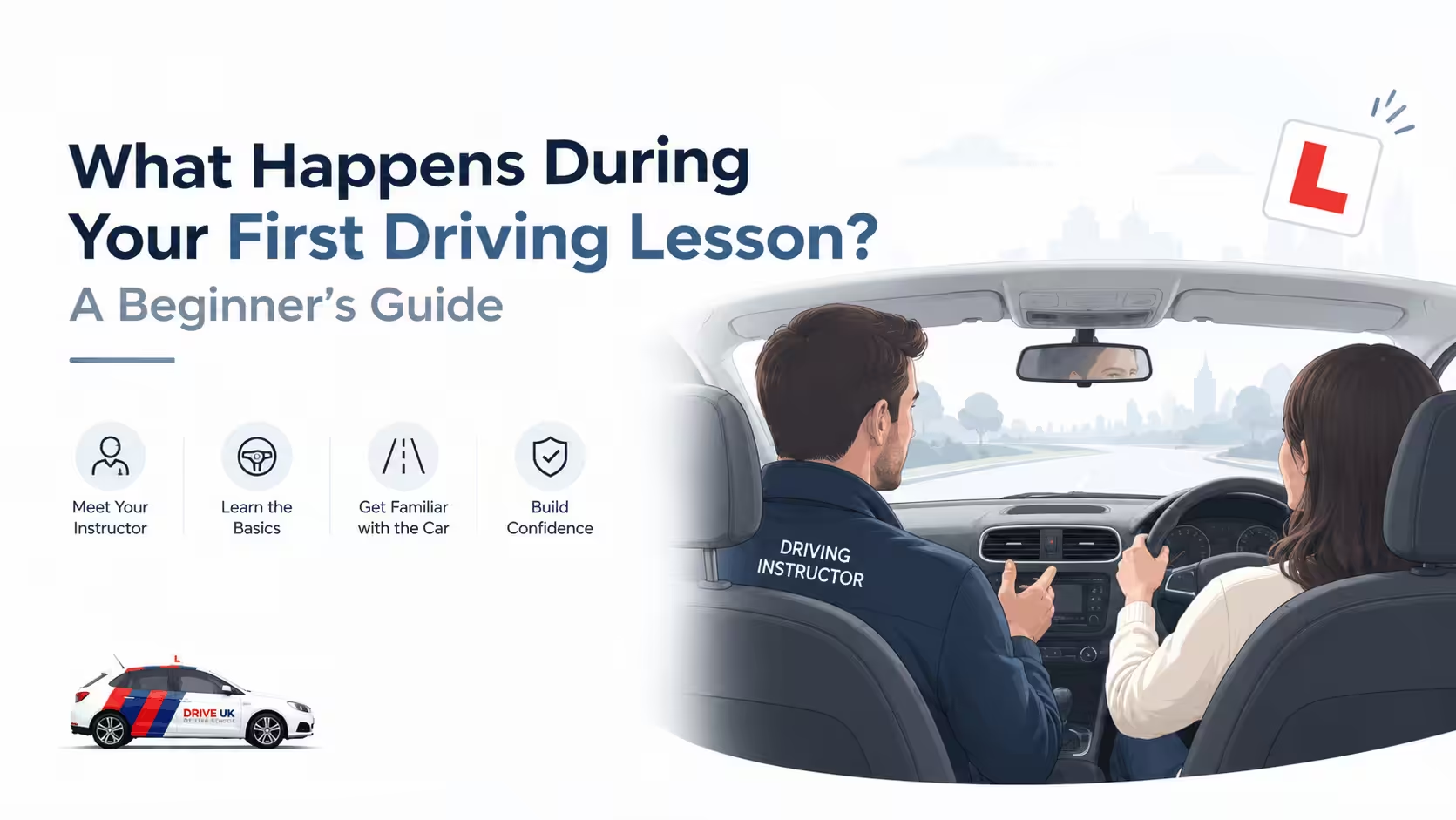
What Happens During Your First Driving Lesson?
Feeling nervous before your first driving lesson is completely normal. You might wonder whether you’ll drive on busy roads, stall the car, or make mistakes in front of your instructor.
The good news is that your first lesson is usually about learning the basics at a comfortable pace. Your instructor will explain the car’s controls, discuss safety, and help you get familiar with driving before introducing more challenging situations.
1. Meeting Your Driving Instructor
Your instructor will usually confirm your details and ask about any previous driving experience. If you’re a complete beginner, there’s no need to worry about knowing anything beforehand.
2. Learning the Car Controls
You’ll learn about the steering wheel, pedals, mirrors, indicators, gears, and handbrake. In a manual car, your instructor may also explain clutch control and the biting point.
3. Moving Off and Stopping
Depending on your confidence and the lesson location, you may practise moving off, steering, controlling your speed, and stopping safely in a quiet area.
4. Getting Used to the Road
If you’re ready, your instructor may introduce simple road situations. They’ll guide you through observation, positioning, and basic decisions while you build confidence.
What Should You Bring to Your First Driving Lesson?
Before your lesson, make sure you have:
- A valid UK provisional driving licence.
- Glasses or contact lenses if you need them to drive safely.
- Comfortable shoes that let you feel the pedals.
- Any booking details requested by your instructor.
You must meet the legal requirements for learning to drive before starting practical lessons.
Tips for Your First Driving Lesson
- Ask questions: Tell your instructor if something isn’t clear.
- Don’t rush: Focus on learning one skill at a time.
- Listen carefully: Follow instructions and ask for clarification when needed.
- Stay calm after mistakes: Stalling or needing extra guidance doesn’t mean you’re a bad driver.
- Get enough rest: Being alert helps you concentrate and learn.
Common Beginner Mistakes
New learners sometimes look down at the gear stick, grip the steering wheel too tightly, or worry too much about making mistakes.
Try to keep your attention on the road and listen to your instructor’s feedback. You aren’t expected to master everything in one lesson. Progress comes with practice and consistency.
People Also Ask: First Driving Lesson FAQs
How long is a first driving lesson?
Many beginner lessons last around one to two hours, depending on the instructor and what you’ve booked. Confirm the duration before your lesson.
Will I drive on the road during my first lesson?
You may drive on a quiet road if your instructor considers it suitable. The lesson will depend on your experience, confidence, and safety.
Is the first driving lesson difficult?
It can feel unfamiliar, but your instructor will guide you through the basics. You don’t need to know how to drive before your first lesson.
Can I make mistakes during my first lesson?
Yes. Mistakes are a normal part of learning. Your instructor will help you understand what happened and how to improve.
Should I learn in a manual or automatic car?
Choose manual if you want the option to drive both manual and automatic cars after passing. Automatic Driving lessons may suit learners who prefer fewer controls to manage.
How can I feel less nervous before driving lessons?
Arrive on time, wear comfortable shoes, and tell your instructor you’re nervous. Taking things slowly and asking questions can make the experience easier.
Conclusion
Your first driving lesson is about getting comfortable, understanding the controls, and taking your first steps towards safe driving. You don’t need to be perfect or know everything in advance. Listen to your instructor, ask questions, and focus on improving one skill at a time.